A World Worth Meeting: Why Curiosity Beats Fear
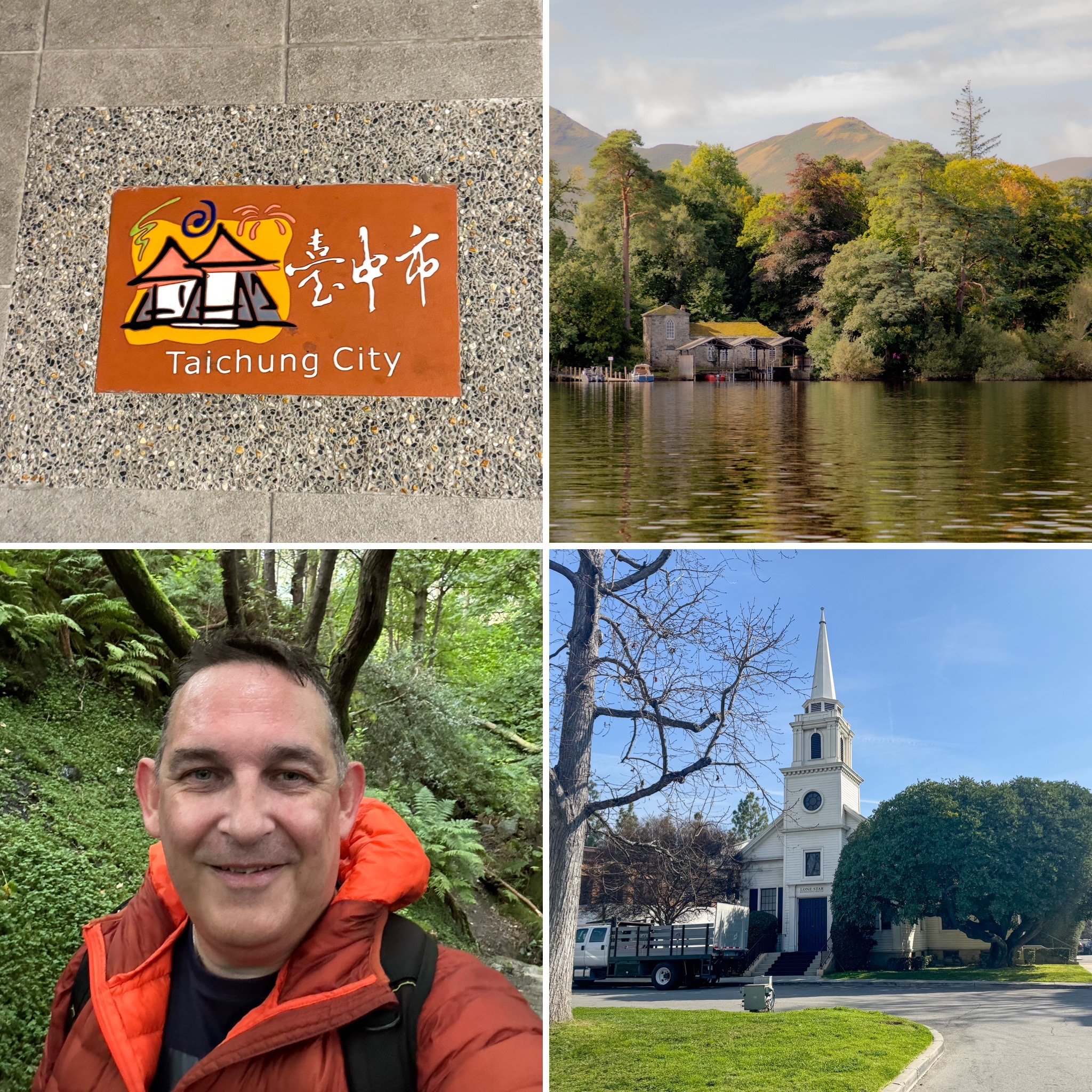
There was a time — and it doesn’t feel that long ago — when travelling somewhere new felt like unwrapping a present. You never knew what you’d get. Sometimes it was breathtaking scenery. Sometimes it was food that tasted like someone had boiled a sock. Sometimes it was a taxi driver who insisted you needed to visit his cousin’s shop “just for looking,” and before you knew it you were buying something that you neither needed nor would fit in your luggage but would look good on your coffee table.
But always — always — it was an adventure.
And the best part? The people.
Not “people” as a slogan. Not “the public” as politicians like to say when they’ve never actually met one. I mean real people — the ones you bump into on trains and in markets. The ones who laugh at your pronunciation and then secretly admire your courage for trying.
Travelling taught me something simple and quietly powerful:
The world is full of people who are just like us.
It didn’t matter where I went — Taiwan, Italy, Spain, America, back to Scotland to argue over how rain should be categorised — people were people. They wanted the same things I did: a decent meal, a life that didn’t feel like a permanent struggle, a bit of dignity, and maybe a lottery win if the universe was feeling generous.
But it feels like we’ve forgotten all that.
Somewhere along the line — while we were busy working, worrying about bills, shouting at slow broadband, and waiting for politicians to do something other than argue on TV — a new theory arrived:
“The world is full of enemies and getting worse by the minute.”
Which is odd, because I’ve met the world.
It’s lovely, you must keep your wits about you yes, but lovely.
Now, fear didn’t just wander in on its own.
It was invited.
And not by us — we were too busy living our lives.
No, fear was ushered in by people with a business plan and it works like this:
Take a population that’s fed up.
Towns left behind, industries changing or dying, wages not keeping up, communities exhausted.Identify their frustrations.
This bit is easy: just walk through any British high street and count the number of “closing down” signs.Tell them who to blame.
Pick a target. Don’t worry if it makes sense — fear isn’t fussy.Offer yourself as the solution.
With flags. And shouting. And promises so big they could only ever be printed on banners.
It’s not a new trick.
It’s the oldest one there is.
It worked for demagogues in the 1930s, it worked for Trump, it worked for Reform for a while — and it works now because people are not stupid… they’re angry, tired, and feeling ignored.
And honestly? I don’t blame them.
If you’ve ever nodded along to Farage because at least, he sounds like he understands you, or if you once cheered when Trump said something outrageous just because it shook the room — you’re not an extremist. You’re not a monster.
You’re human.
You’re someone who’s been promised for 20 years that things would get better… and watched them get worse.
You’ve been told “global Britain” would be thriving while your town centre hasn’t seen a fresh coat of paint since Woolworths ran a two for one deal.
You’ve been lectured by people who have never set foot in your postcode.
And you’ve watched government after government throw your concerns in the “too difficult” drawer.
Fear filled that gap because nothing else was being offered.
But here’s the part the fear merchants hope you never discover:
The world is not actually terrifying.
It’s just noisy.
And much of that noise is deliberate.
When you travel — properly travel — you learn that foreign cultures are not threats. They’re just other versions of the same human mess we’re all trying to navigate.
You meet families who want their kids to be safe.
You meet shopkeepers who work themselves into the ground.
You meet taxi drivers who have strong opinions about football, even if they only know two English words, “Liverpool” and “no”.
You meet people who offer you tea when they have nothing else.
Nobody tells you in these moments:
“You should be scared of these people.”
Because it makes no sense.
You’re too busy laughing with them.
Fear hates first-hand experience, it feeds on ignorance
Fear thrives when you stay home.
Fear thrives when you only know the world through headlines.
Fear thrives when people scream at each other on social media.
But take a step outside — even just one step — and you see how flimsy it all is.
While waiting to climb Kilimanjaro, our mountain leader and guide — a quietly authoritative fellow called Bruce (George really but I never understood why the two names?) — pulled me away from the group and, to my alarm, drove us away from everyone. For what seemed an eternity but was only probably 10 minutes - we drove.
My inner dramatist immediately drafted the story where I’d wandered into a cautionary travel essay. Instead, Bruce introduced me to his family, poured us steaming cups of tea, and announced, with the blandest confidence, that he would look after our group just as well as his family.
There I was, a stranger in a jacket that thought it was a sleeping bag, anxiously calculating escape routes — and instead I left with warm hugs, laughter, and the comforting knowledge that the person with the rope and the map had a heart the size of the mountain itself.
They were poor.
But they were kind.
They shared their time and trust with a total stranger.
On a business trip to Moscow, I learned that corridor mileage is the most alarming unit of measure. My hosts whisked me away through a labyrinth of doors and passageways — the kind of place that, in a film, would end with an ominous spotlight and an accordion playing.
My mind supplied a sequence about nail-pulling and interrogations so convincingly that I apologised to my shoes. Then, with the same casual deflation of a soufflé, we entered a modest office where stern faces turned into smiles and the “questioning” was an enthusiastic, slightly baffling conversation about offshore pipelay techniques over strong coffee.
It turned out the only thing they wanted to extract from me was engineering know-how — and possibly the secret recipe for British sarcasm.
That’s humanity.
Not the headlines.
Not the fear.
And absolutely nothing like the bogeymen we’re told to be terrified of.
The great thing about Brits is that we can laugh at absolutely anything — ourselves most of all.
We joke about rain.
We joke about queues.
We joke about sport — just don’t mention the cricket.
We are a sarcastic, warm, welcoming nation.
And humour is our greatest defence against anyone trying to turn us against each other.
It’s very hard to fear someone once you’ve shared a laugh.
So what do we do?
Not “revolution.”
Not “take up arms.”
Not “shout louder than the other side.”
Just this:
Stay curious.
Ask questions.
Meet people.
Challenge easy answers.
Don’t buy fear when you can buy a plane ticket.
Or even just a coffee with someone you disagree with.
Because here's the truth:
People who are scared are easier to control.
People who are curious are harder to fool.
Travel makes you curious.
Stories make you curious.
Friendship makes you curious.
Curiosity breaks the machine.
And here’s the hopeful part — the bit we all need
Despite everything — the noise, the anger, the shouting, the division — there is still a world out there full of good people waiting to meet you.
A world full of humour and kindness and odd little moments that change how you see everything.
A world where strangers become friends, and differences become interesting instead of frightening.
A world that reminds you — gently but firmly — that you are being lied to by people who profit from your fear.
A world worth defending.
A world worth seeing.
A world worth meeting.
So take the step.
Take the trip.
Take the chance.
Because once you’ve looked someone in the eye over a drink and a conversation — no politician, no party, no fear merchant on earth can convince you that they’re your enemy.
At the end of all this worrying and discovering that most people don’t, in fact, want to kidnap you for your fingernails, you realise our real treasure isn’t flags or borders or whatever slogans get sprayed onto buses. It’s our values — the simple, stubborn human ones we keep dragging with us no matter where we go. Kindness. Curiosity. Fairness.
The willingness to share a cup of tea on the side of a mountain or a strong coffee in a concrete maze. These are the things that tie us together, even when a few loud voices try to convince us the world is full of enemies. It isn’t. It’s full of people who, just like us, want to get through the day with a bit of dignity and maybe a laugh.
And that’s the bit worth protecting, nurturing, and passing on — because once you strip away the noise, that’s the stuff that keeps the lights on for humanity.
And that, my friend, is how hope wins.